

How to Add Subpage in WordPress
When you’re building a WordPress site, it’s easy to create pages. But what if you want to organize them better—like putting a page under another one? That’s where subpages (or child pages) come in. And if you’ve never done it before, it might seem a little confusing.
Without subpages, your site can feel messy and hard to navigate. Visitors might have trouble finding what they’re looking for, and your content can feel all over the place.
But don’t worry—adding a subpage in WordPress is super simple once you know how. In this blog post, We’ll show you step-by-step how to create a subpage in just a few clicks. You’ll have your site organized and easy to explore in no time!
Why Subpages are Useful for WordPress Websites?
Subpages in WordPress (also called child pages) are incredibly useful for organizing and optimizing your website. Here’s why they matter.
Subpages allow you to break down complex topics into smaller, related sections. Instead of cramming all your content into a single page, you can create a parent page (e.g., “Services”) and link subpages underneath it (e.g., “Web Design,” “SEO,” “Content Marketing”). This makes your website easier to navigate and helps visitors find what they need faster.
ii. Improved SEO and keyword targeting
Search engines love well-structured content. Subpages help you target specific keywords more precisely and organize related content under a thematic umbrella. This improves your internal linking, lowers bounce rates, and makes it easier for Google to crawl your site, potentially boosting your rankings.
iii. Clean URLs that reflect site hierarchy
WordPress automatically structures your URLs with a hierarchy like example.com/services/seo/. This not only looks more professional but also shows both users and search engines the relationship between pages. It reinforces topic clusters and gives more context to each subpage.
iv. Scalable site architecture
As your site grows, subpages make it easy to expand your content without disrupting your layout. Want to add a new service or FAQ? Just create a subpage under the relevant parent, and it fits right into the structure.
v. Easier management and maintenance
When you group related content into subpages, updating becomes more manageable. You know exactly where each piece of information lives, so changes can be made faster without digging through cluttered menus or mixed content blocks.
Adding a Subpage in WordPress-Simple Yet Effective Steps
WordPress allows you to create subpages to organize your website’s content efficiently. Subpages are useful for grouping related content under a parent page, making navigation easier for your visitors. Here’s a quick guide on how to add a subpage in WordPress. Let’s get started!
Once you have logged into the WordPress dashboard, you will find the menu item “Pages” on the right side of the large main menu. Click on this menu item or select “Add new” directly from the submenu.

Step-2. Create a new subpage
Now you can create your new page, which will later be used as a subpage. You don’t have to pay attention to anything but can create the page exactly as you always do.
Step-3. Open the page attributes on the right side
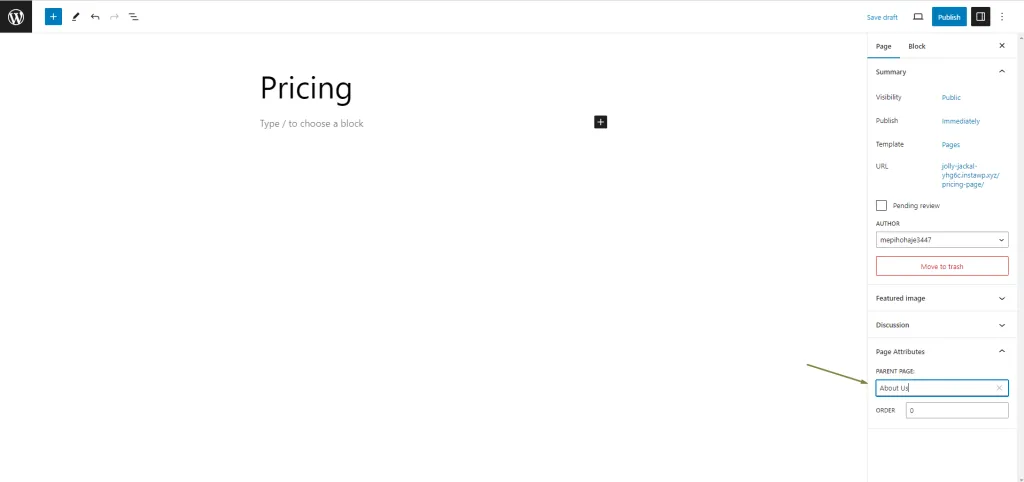
Once you have completed the content for your new subpage, take a look at the right-hand edit menu for your page. You will probably have to scroll down a bit, but one of the tabs there is named “Page Attributes”.

This is the area where you tell WordPress whether you want your new page to be the main page or a subpage of an existing page.
Step-4. Select the parent page
If you have opened the “Page Attributes”, you will already find a text field with the name “Parent Page”. This field is dynamic. This means that you start by entering the name of your desired main page.

WordPress already provides you with pages from your website that might fit as you type. Select the page you want to subordinate your new page to.
Step-5. Publish your subpage
After you have finished your page and made all settings, you can publish the page. It will now be recognized by WordPress as a subpage of a parent page.

How to Troubleshoot Sub-Page Issues
Troubleshooting sub-page issues on a website can involve a few different angles depending on the symptoms you’re seeing — broken links, 404 errors, styling inconsistencies, or content not showing. Here’s a step-by-step breakdown to help you systematically troubleshoot.
1. Check the URL structure
Make sure the sub-page URL is spelled correctly and follows your site’s permalink structure.
- In WordPress: Go to Settings > Permalinks and click Save Changes to flush rewrite rules.
- In custom code: Ensure your routing (e.g., in frameworks like Laravel, React Router) matches the intended path.
2. Verify page existence
Double-check that the sub-page actually exists in your CMS or file system.
- In WordPress: Look under Pages to ensure the sub-page hasn’t been moved to Trash.
- In static sites: Confirm that the HTML or template file for the sub-page is present.
3. Check for 404 or server errors
Use browser developer tools or a service like GTmetrix or Pingdom to see if the page is returning a 404, 500, or other error.
- 404: Page not found – the page might be unpublished, deleted, or incorrectly linked.
- 500: Server error – look into your error logs for more details.
Ensure your menu or navigation links point to the right slug or URL.
- Hover over the link and check the URL preview.
- Use “Inspect Element” to see if the anchor tag is malformed.
5. Inspect page template and theme
If the page loads but doesn’t look right, it could be a template issue.
- Check if the correct page template is selected in the CMS.
- Look for theme or template file conflicts — especially if you recently updated your theme.
6. Clear cache
Sometimes changes don’t appear due to caching.
- Clear your browser cache.
- Clear your site cache if using a plugin like WP Super Cache, W3 Total Cache, or a CDN like Cloudflare.
7. Disable plugins or custom scripts
A plugin or script might be interfering.
- Temporarily disable plugins one by one to isolate the issue.
- Look in the browser console for JavaScript errors.
8. Check permissions and visibility settings
Make sure the sub-page is:
- Published
- Set to Public visibility
- Not password-protected (unless intentionally)
9. Inspect .htaccess or routing config
For custom or Apache-based sites:
- Check the
.htaccessfile for rewrite rules or redirects that could block access. - In frameworks, check route configurations or middleware that might be denying access.
10. Use developer tools
Open browser dev tools (F12) and check:
- Console tab for JavaScript errors
- Network tab for failed requests
- Elements tab for hidden or broken layout elements
Conclusion on How to Add Subpage in WordPress
That’s all. We hope you have already learned the nuts and bolts of adding a subpage in WordPress. Now you can try to add a subpage.
If you face any kind of difficulties while adding a subpage to your WordPress website, then feel free to drop us a line in the comment section below.
If you liked this post, don’t forget to subscribe to our blog so that we can notify you once any post is published. Finally, you can also follow wpWax on Facebook, Twitter, and LinkedIn for more exciting news, offers, and product updates.


Md Hamim Khan
Md Hamim Khan is the Content and SEO Manager at wpWax, where he creates engaging content that helps improve online visibility. When he’s not at work, he loves playing cricket and enjoys chatting with friends, family, and colleagues.


Leave a Reply
You must be logged in to post a comment.